Let me save you some time. Most reference checks are a complete waste of effort. There, I said it.
For nine years I've built remote teams across continents, placed hundreds of overseas candidates with UK companies, and I've watched the same reference dance play out over and over. Hiring managers holding out for that perfect validation, recruiters chasing former bosses who never pick up, and candidates who've coached their references so thoroughly they might as well have written the script themselves.
But here's what's strange. Despite reference checking being increasingly automated, gamified, and theoretically streamlined by 2026, we're still clinging to practices that were questionable even back when I started in this industry. The tools have changed. The problems haven't.
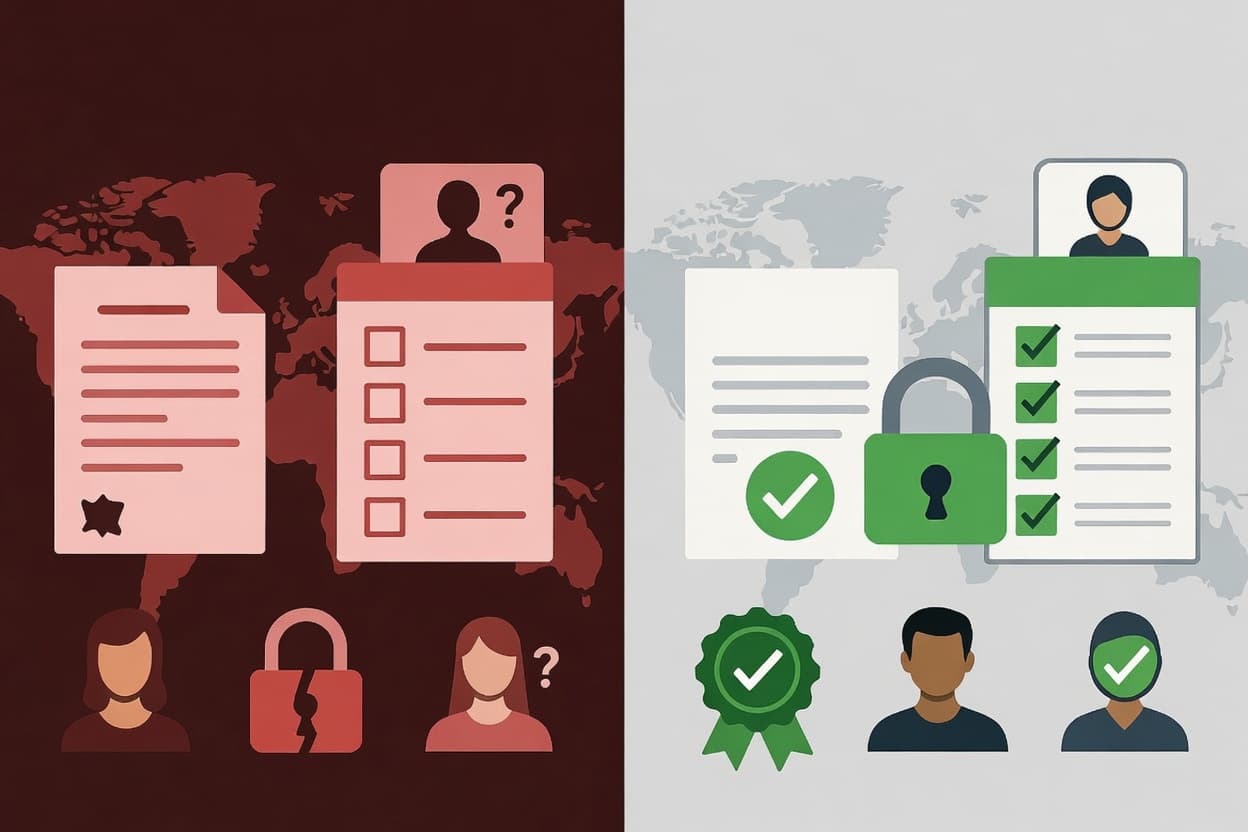
Reference checking is broken. Here's why.
Recruiters cling to references like a security blanket. We think they protect us from bad hires, when actually they often just delay good ones. If I could count the number of brilliant Filipino developers I've placed who almost lost offers because some HR person couldn't reach their former manager at 2 AM UK time... well, I'd need more fingers.
The fundamental issue remains unchanged in 2026: most references are either:
- Overwhelmingly positive (because who lists someone who'll trash them?)
- Impossible to reach (especially with global hiring)
- So vague they're meaningless ("Yes, she worked here. She was good.")
- Or, increasingly, automated responses from companies that prohibit anything beyond confirming dates
I've placed people whose references never materialised and who turned out to be absolute superstars. And I've placed people with glowing references who crashed and burned within weeks.
So why are we still doing this?

Beyond Tick Boxes: Diversity Recruitment Strategies That Actually Transform UK Workplaces

Master the Virtual Hot Seat: 7 Video Interview Techniques Recruiters Don't Tell You

How to Master 'Tell Me About Yourself' Interview Question: UK Expert Insights
What actually predicts performance in 2026
If standard references don't work, what does? From building teams across three continents, I've found these approaches actually predict performance:
Targeted Network Referencing
Reaching out to mutual network connections who worked with the candidate can provide genuine operational context. However, under UK GDPR and ICO privacy guidelines, transparency is essential. Always inform the candidate beforehand and obtain consent before contacting former colleagues outside their provided reference list—especially to protect their confidentiality at current or recent employers.
Not everyone loves this approach. Some find it intrusive. I find it saves months of pain later.
Project-based assessment
Give candidates real work. Pay them for it. See what happens.
When I'm hiring developers in Manila or content writers in Kyiv, I care less about what their last boss thinks and more about whether they can actually code or write. A 3-hour paid task tells me more than three references ever could.
The companies getting this right in 2026 are using platforms that facilitate project-based assessment rather than traditional reference checking. The OHub has been pioneering this with their video-first approach, letting candidates demonstrate skills rather than just talk about them.
The right reference questions
If you must do traditional references, at least ask questions that actually predict success.
Forget "What were their strengths and weaknesses?" - that's a waste of breath. Everyone has the same rehearsed answers.
Instead, try:
- "What's a specific project where they excelled, and what made them effective?"
- "If you were managing them again, what would you do differently to get the best from them?"
- "What kind of team dynamic brings out their best work?"
- "When did they struggle, and how did they respond?"
Notice these questions assume problems happened (because they always do) and focus on how the person responded rather than pretending perfect employees exist.
When to skip references entirely
There are times when references are a total waste of time and energy. I've learned this the hard way.
Skip them when:
The role is junior or entry-level
For graduates or junior roles, references tell you almost nothing useful. They've barely established a work history, and academic references rarely translate to workplace performance.
Focus instead on assessing trainability, motivation, and basic skills through practical exercises. That's it.
You're hiring for a completely new context
If you're hiring someone to do something substantially different from their previous role - perhaps they're making a career pivot - then references about their old work become much less relevant.
I once placed an accountant who became a fantastic project manager. Had I relied on references about her accounting skills, I'd have missed the transferable skills that made her perfect for the new role.
When time is of the essence
The UK tech market in 2026 moves absurdly fast. While you're waiting for references, someone else is making an offer.
This is especially true for in-demand roles. Data from CIPD shows that average time-to-hire has decreased by nearly 30% since 2023, and companies with the longest hiring processes are losing top candidates.
When you find that perfect candidate, sometimes you need to trust your assessment and pull the trigger.
The role of AI in reference checking
AI reference checking tools have flooded the market since 2024. They promise to automate the entire process, from contacting references to analysing responses for red flags.
Here's my unpopular opinion: they're mostly rubbish.
Sure, they're convenient. They can ping references at scale and generate pretty reports. But they fundamentally misunderstand what makes a good hire. No algorithm can detect the subtle cues in a conversation that might tell you whether someone will fit your team culture.
And let's be honest - candidates are now coaching their references on how to respond to these automated systems. The cat-and-mouse game continues.
The best tools are those that enhance human judgment rather than replace it. Video references (where previous managers record short clips answering key questions) at least give you some nonverbal cues to work with.
The legal landscape in 2026
Navigating UK data privacy laws requires care. Confidential employment references given by an employer are generally exempt from Subject Access Requests (SARs) under Schedule 2 of the UK Data Protection Act 2018. However, because corporate policy increasingly limits former employers to basic date and title confirmations to mitigate liability, traditional references have become far less descriptive.
This has led to a chilling effect, with many companies providing only the most basic confirmations of employment to avoid potential litigation.
What's more, the implementation of the UK's post-Brexit AI Governance Framework last year means automated reference checking systems now require explicit consent and must provide explanation of their methods.
Navigating this landscape requires staying current with ICO guidance - which, frankly, most HR departments aren't doing properly.
So what actually works?
After nearly a decade placing talent globally, here's my pragmatic approach to references in 2026:
-
Trust but verify. Use your own judgment first, then use references as a check rather than a decision-maker.
-
Focus on skills demonstration over past employer opinions. This is particularly crucial for technical roles.
-
Consider cultural context. A "good" reference in the Philippines sounds different from one in the UK. Understanding cultural nuances matters enormously.
-
Use references to learn how to manage someone, not to decide whether to hire them. Ask questions about working style rather than about performance.
-
Speed matters. If references are taking more than a week, you're doing something wrong or asking the wrong people.
References should be one data point among many - not a gate that worthy candidates get stuck behind.
For distributed teams especially, I've found The OHub's approach to talent assessment refreshingly practical. Their focus on demonstrable skills over reference bureaucracy aligns with what actually works in the real world.
Where do we go from here?
Referencing isn't going away. Despite its flaws, it provides a comfort blanket that many hiring managers aren't ready to abandon. And to be fair, when done properly, it can provide valuable insights.
But we need to be honest about its limitations.
I predict that by 2030, traditional reference checking will be largely replaced by a combination of skills assessment, reputation scoring (think LinkedIn on steroids), and AI-enhanced behavioural analysis during interviews.
Until then, use references wisely. Extract what value you can. But never let them be the reason you miss out on a great hire.
Because in my experience, the best predictor of how someone will perform isn't what they did in their last job.
It's what they do when you give them a challenge in front of you.